
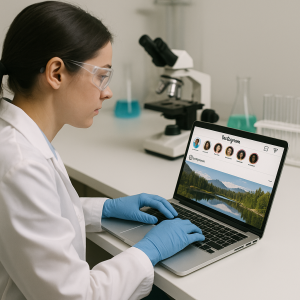
 Instagram isn’t just for selfies and travel photos anymore. Scientists and biotech startups are finding innovative ways to transform lab work into engaging content. Whether it’s time-lapse microscopy videos, mesmerizing DNA art, or behind-the-scenes lab experiments, these creators are using their platforms to build audiences, raise awareness, and even attract investors.
From Petri Dishes to Public Platforms
In the past, science communication mostly lived in academic journals or niche conferences. Now, with the rise of social media, biotech researchers are reaching broader audiences, and Instagram is a key tool. It’s visual, fast-paced, and built for storytelling. For many scientists, especially early-career researchers and startups, it’s an opportunity to showcase their work to the world—and even get followers on Instagram who are genuinely interested in their discoveries.
Dr. Samantha Yamada, a postdoctoral researcher in molecular biology, began posting videos of her CRISPR experiments during the pandemic. Her audience has grown to over 60,000 followers. “At first, I just wanted to show my friends what I do in the lab,” she says. “But when I posted a time-lapse of bacterial growth in a petri dish, it went viral.”
Time-lapse microscopy is one of the most popular forms of lab content on Instagram. It shows biological processes—like cell division or bacterial colonies—unfolding in seconds. The visuals are often colorful, detailed, and oddly satisfying to watch. For non-scientists, they offer a glimpse into a hidden world. For fellow researchers, there’s a chance to see new techniques and tools in action.
Turning Science Into Art
Beyond the lab bench, some biotech influencers are blending science with design. DNA art, for example, has gained traction as both a visual and educational tool. Companies like Dot One and DNA11 create custom portraits based on genetic data. Others, like @sciencesam or @biotweeps, create hand-drawn illustrations and infographics that make complex topics more digestible.
This crossover between art and science isn’t just aesthetic—it’s strategic. That engagement tells Instagram’s algorithm to push the content to more users.
“People don’t just want facts,” says André Cohen, a biotech communications consultant. “They want stories, visuals, and something that sparks curiosity. The influencers who grow are the ones who understand how to mix scientific credibility with social media style.”
Lab Life: Behind the Scenes
Another content trend is the “day in the lab” series. These short videos show researchers in action—pipetting samples, running gels, or setting up experiments. Sometimes, they add voiceovers or text overlays to explain what’s happening. At other times, it’s just satisfying visual routines, such as clicking pipette tips into place or swirling a solution in a beaker.
It’s not all flashy. Some of the most popular posts are simple and honest, like a failed experiment or a messy lab bench. This kind of transparency helps humanize the science and makes it more relatable.
That relatability builds trust. Followers start to see the scientists behind the discoveries, not just the data. For biotech startups, this is crucial. Many use Instagram not just for education, but for brand building and recruiting. A clean, well-curated Instagram page helps show off the company culture, scientific rigor, and creative edge.
Engagement Over Explaining
One reason biotech content is growing on Instagram is that it plays into the platform’s strength: short-form visual storytelling. This doesn’t mean dumbing things down. It means choosing what to show—and what to leave out.
Extended captions are fine, but successful accounts often hook viewers first with a striking visual or a bold statement. For example, a post might start with: “Watch this cancer cell eat a nanoparticle.” That’s more likely to stop a scroll than “Studying endocytosis using nanoparticle probes.”
Some influencers add music, trending audio, or memes to make their posts feel current. Others use Instagram’s poll and quiz features in Stories to test their followers’ knowledge or get feedback. These interactive tools boost engagement and help tailor future content.
Tips from the Trenches
For scientists or biotech startups looking to grow on Instagram, here are a few takeaways:
- Start with what’s visual. Focus on processes or results that appear interesting, such as cell cultures, gel electrophoresis, and microscopy.
- Show the human side. Lab selfies, team celebrations, and even minor setbacks can connect with audiences.
- Keep captions clear. Use plain language. If needed, add more detail in a second slide or use the caption to link to longer content elsewhere.
- Post consistently. You don’t need to go viral—steady growth comes from regular posting and responding to comments.
- Collaborate. Tagging other scientists, reposting peers’ content, and doing joint Q&As can expand reach.
Why It Matters
This isn’t just about follower counts. Science communication on social media can shape public understanding, inspire the next generation of researchers, and even influence funding. When people can see what’s happening in a biotech lab—and why it matters—they’re more likely to care, support, and share.
Instagram won’t replace peer-reviewed journals, but it’s becoming an essential part of the scientific ecosystem. For biotech influencers, this means more opportunities to share their stories—and perhaps even influence how the public perceives science.
